
When it comes to perimeter security, blade barbed wire stands out as a formidable deterrent. As a supplier deeply involved in the blade barbed wire industry, I often receive inquiries about its various aspects, one of the most common being the weight per meter. Understanding this metric is crucial for customers as it impacts transportation costs, installation efforts, and overall project budgets. In this blog, I'll delve into the factors that influence the weight of blade barbed wire per meter and provide some insights to help you make informed decisions.
Composition and Structure of Blade Barbed Wire
Blade barbed wire, as the name suggests, consists of sharp blades attached to a wire strand. The basic components include the core wire and the blades. The core wire provides the structural integrity, while the blades are the main deterrent against unauthorized access. The number of blades per unit length, the thickness of the core wire, and the material used all contribute to the overall weight of the wire.
The core wire is typically made of steel, which offers high strength and durability. The gauge of the core wire can vary, with common sizes ranging from 2.0mm to 3.0mm. A thicker core wire will naturally weigh more per meter. Additionally, the type of steel used can also affect the weight. For example, galvanized steel, which is coated with a layer of zinc to prevent corrosion, may have a slightly different weight compared to non - galvanized steel due to the added zinc layer.
The blades are usually made of high - quality steel as well. They are designed to be sharp and rigid. The number of blades per meter can vary depending on the design and intended use. Some blade barbed wires have a higher density of blades, which increases the weight per meter. The shape and size of the blades also play a role. Larger and more complex blade designs will add more mass to the wire.
Calculating the Weight per Meter
To calculate the weight of blade barbed wire per meter, you need to consider the weight of the core wire and the weight of the blades. The weight of the core wire can be calculated using the formula for the weight of a cylindrical object:
[W_{core}=\pi\times(\frac{d}{2})^2\times L\times\rho]
where (d) is the diameter of the core wire, (L) is the length (in this case, (L = 1m)), and (\rho) is the density of the steel material. The density of steel is approximately (7850kg/m^3).
For example, if the diameter of the core wire (d = 2.5mm=0.0025m), then:
[W_{core}=\pi\times(\frac{0.0025}{2})^2\times1\times7850\approx0.038kg]
The weight of the blades is more difficult to calculate precisely because it depends on the number, size, and shape of the blades. However, if we know the average weight of a single blade and the number of blades per meter, we can estimate the total weight of the blades per meter. Let's assume that the average weight of a single blade is (0.01kg) and there are 20 blades per meter. Then the weight of the blades per meter (W_{blades}=0.01\times20 = 0.2kg)
The total weight of the blade barbed wire per meter (W = W_{core}+W_{blades}=0.038 + 0.2=0.238kg)


In reality, the weight of blade barbed wire per meter can range from approximately 0.2kg to 0.5kg, depending on the specific design and specifications.
Impact of Weight on Applications
The weight of blade barbed wire per meter has several implications for different applications.
Transportation
Heavier wire requires more effort and cost to transport. As a supplier, we take this into account when arranging shipments. For long - distance transportation, the additional weight can significantly increase the freight cost. Customers also need to factor this in when planning their projects, especially if they are on a tight budget.
Installation
A heavier wire can be more difficult to install. It may require more manpower and specialized equipment to handle and fix in place. For large - scale projects such as School Fencing or Municipal Fencing, the installation process can be more time - consuming and labor - intensive.
Structural Requirements
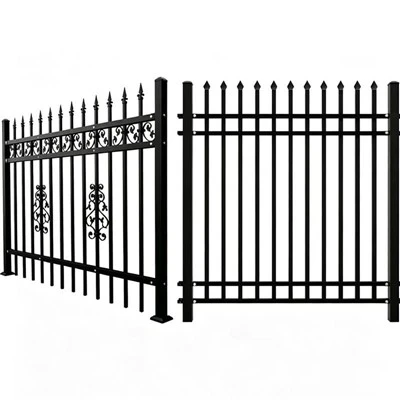
In some cases, the weight of the blade barbed wire can affect the structural requirements of the fencing system. For example, a heavier wire may require stronger support posts to ensure stability. This is particularly important for applications like Residential Yard Fence, where the fence needs to withstand environmental factors such as wind and snow.
Comparing with Other Types of Fencing
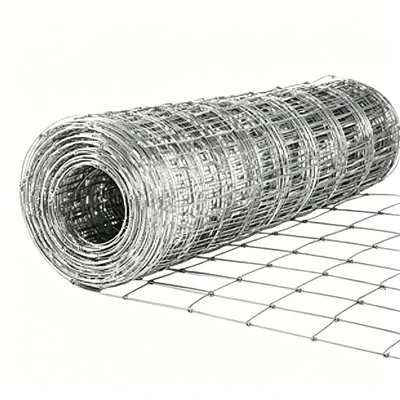
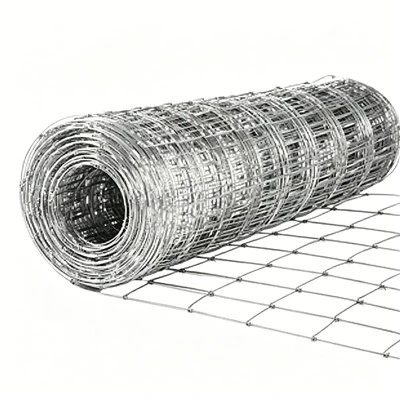
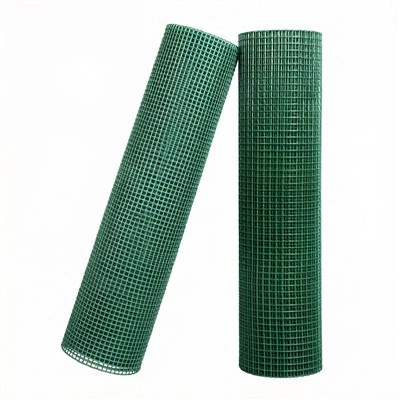
When considering perimeter security, customers often compare blade barbed wire with other types of fencing, such as Green Coated Wire Fencing. Green coated wire fencing is generally lighter than blade barbed wire because it does not have the additional weight of the sharp blades. This makes it easier to install and transport. However, in terms of security, blade barbed wire is a much more effective deterrent.
Quality and Weight
It's important to note that the weight of blade barbed wire can also be an indicator of its quality. A heavier wire may suggest a thicker core wire and more robust blades, which generally means better durability and performance. As a supplier, we ensure that our Blade Barbed Wire meets high - quality standards, and the weight is carefully controlled to provide the best balance between security and practicality.
Conclusion
In conclusion, the weight of blade barbed wire per meter is influenced by various factors, including the thickness of the core wire, the number and size of the blades, and the material used. Understanding this metric is essential for customers to make informed decisions about their perimeter security projects. Whether it's for School Fencing, Municipal Fencing, or Residential Yard Fence, the weight of the wire affects transportation, installation, and overall structural requirements.
If you are in need of high - quality blade barbed wire or have questions about its weight and suitability for your project, please do not hesitate to contact us for a detailed discussion. Our team of experts is ready to provide you with the best solutions tailored to your specific needs.
References
- Engineering Handbook on Steel Materials
- Industry Standards for Perimeter Fencing Products