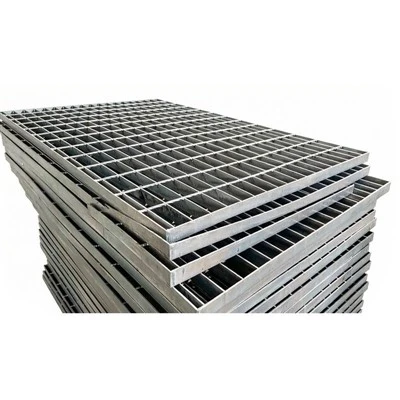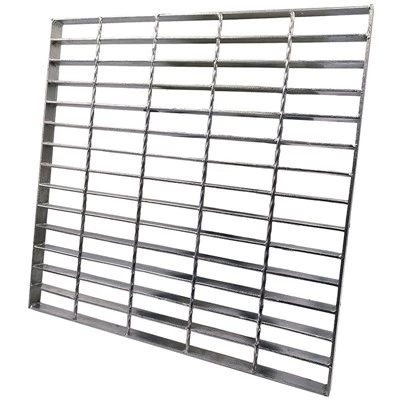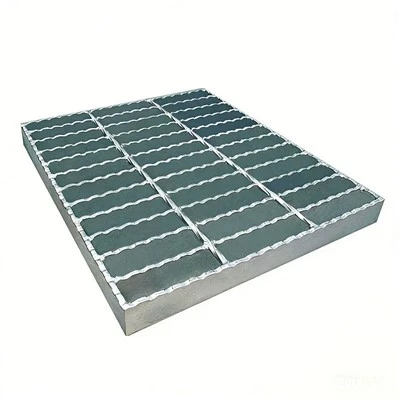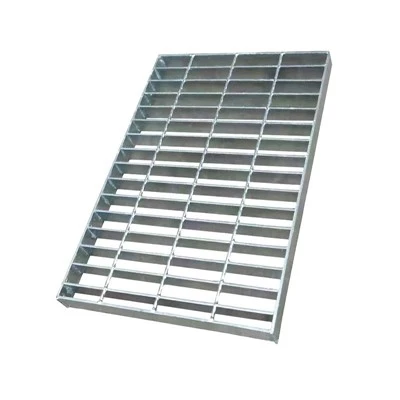
The working principle of grating panels relies on load-bearing flat bars acting as the primary structural members and crossbars serving as connecting and stabilizing elements; together, they form a stable, three-dimensional load-bearing system through their intersecting configuration. When an external load is applied to the surface, the force is initially borne by the load-bearing flat bars and transmitted along their length to the supporting structures on either side.
In this process, the crossbars play a crucial role in structural constraint; by linking multiple load-bearing flat bars into a unified whole, they prevent concentrated stress on any single bar, instead distributing the load across adjacent members via the connection points. This mechanism-characterized by "point loading, linear transmission, and surface distribution"-is the fundamental reason why grating panels can support substantial loads despite their relatively low self-weight.
The open-grid structure does not compromise overall stability; rather, by eliminating material that does not contribute to load-bearing, it enhances structural efficiency. In practical application, external forces (such as pedestrian traffic, equipment pressure, or impact loads) are rapidly dissipated and transferred through the grid system to supporting beams or steel frameworks, thereby ensuring the safety and stability of the platform as a whole.