
Reinforced Macmat is a product that has gained significant attention in various industries due to its durability and versatility. As a supplier of Reinforced Macmat, one of the most common questions I receive from customers is whether it is resistant to chemicals. This blog post aims to provide a comprehensive answer to this question, drawing on scientific knowledge and real - world applications.
Understanding Reinforced Macmat
Before delving into its chemical resistance, it's important to understand what Reinforced Macmat is. Reinforced Macmat is a type of geosynthetic material. It is typically composed of high - strength synthetic fibers that are woven or bonded together to form a stable and durable structure. This structure provides excellent reinforcement properties, making it suitable for a wide range of applications such as soil stabilization, erosion control, and as a base for various construction projects.
Chemical Resistance: The Basics
The chemical resistance of Reinforced Macmat depends on several factors, including the type of polymers used in its manufacture, the environment in which it is placed, and the specific chemicals it is exposed to. Most Reinforced Macmats are made from polymers like polypropylene or polyethylene. These polymers have inherent chemical resistance properties that make them suitable for use in a variety of chemical environments.
Resistance to Common Chemicals
- Acids: Polypropylene and polyethylene are generally resistant to weak acids. They can withstand exposure to dilute solutions of hydrochloric acid, sulfuric acid, and acetic acid for extended periods without significant degradation. However, concentrated acids can cause damage to the material. For example, extremely concentrated sulfuric acid can react with the polymer chains, leading to a loss of mechanical strength and integrity.
- Bases: Similarly, these polymers show good resistance to weak bases such as sodium hydroxide and potassium hydroxide in dilute solutions. But like with acids, concentrated bases can have a more detrimental effect on the Reinforced Macmat. Over time, exposure to highly concentrated bases can cause the polymer to swell and lose its structural properties.
- Organic Solvents: The resistance of Reinforced Macmat to organic solvents varies. Non - polar solvents such as hexane and toluene may cause some swelling of the polymer, but in many cases, the material can still maintain its basic functionality. Polar solvents, on the other hand, can have a more severe impact. For instance, acetone can dissolve certain types of polymers, compromising the integrity of the Reinforced Macmat.
Real - World Applications and Chemical Exposure
In real - world scenarios, Reinforced Macmat is used in a variety of settings where it may come into contact with chemicals.
- Industrial Sites: In industrial areas, Reinforced Macmat may be used for soil stabilization or as a liner in waste storage areas. Here, it can be exposed to a wide range of chemicals, including heavy metals, industrial solvents, and acidic or basic waste products. In such cases, it is crucial to select a Reinforced Macmat that is specifically designed to withstand the expected chemical exposure. For example, if the site is likely to have acidic waste, a polypropylene - based Reinforced Macmat with enhanced acid - resistance properties may be a suitable choice.
- Agricultural Applications: In agriculture, Reinforced Macmat can be used for erosion control on fields. It may come into contact with fertilizers, pesticides, and herbicides. Most fertilizers and pesticides are formulated in a way that they do not cause significant damage to the common polymers used in Reinforced Macmat. However, some herbicides, especially those with strong chemical compositions, may need to be considered carefully. It is advisable to test the compatibility of the Reinforced Macmat with the specific agricultural chemicals used on the site.
Testing and Certification
To ensure the chemical resistance of Reinforced Macmat, it is essential to rely on proper testing and certification. Reputable manufacturers conduct a series of laboratory tests to evaluate the material's performance against different chemicals. These tests may include immersion tests, where samples of the Reinforced Macmat are submerged in various chemical solutions for a specific period, and then their mechanical properties such as tensile strength and elongation are measured.
Certification from recognized organizations can also provide assurance of the product's quality and chemical resistance. For example, if a Reinforced Macmat has been certified by a relevant industry standard for chemical resistance, it means that it has met certain criteria in terms of performance under chemical exposure.
Comparing with Other Similar Materials
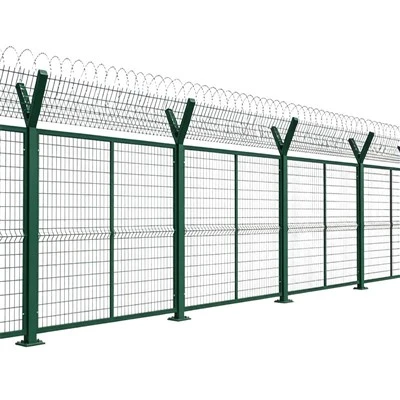
When considering the chemical resistance of Reinforced Macmat, it is also useful to compare it with other similar materials. For example, compared to some traditional fencing materials like Site Perimeter Fencing, which may be made of metal and can be susceptible to corrosion from certain chemicals, Reinforced Macmat generally has better chemical resistance properties.
Similarly, Garden Perimeter Fence materials, which can be made of wood or other materials, may not be as resistant to chemical exposure as Reinforced Macmat. Wood can rot or be damaged by chemicals in the soil or from fertilizers and pesticides, while Reinforced Macmat made from polymers can withstand these conditions better.


Plastic Coated Welded Wire Mesh also has some level of chemical resistance, but the coating may wear off over time, exposing the underlying metal to chemical attack. In contrast, Reinforced Macmat's homogeneous polymer structure provides more consistent chemical resistance throughout its lifespan.
Product Suitability and Customization
Depending on the specific chemical environment, it may be possible to customize Reinforced Macmat to enhance its chemical resistance. Some manufacturers offer specialized coatings or additives that can improve the material's performance against specific chemicals. For example, if a Reinforced Macmat is going to be used in a site with a high concentration of a particular solvent, a polymer coating can be applied to the material to reduce its susceptibility to that solvent.
When choosing a Reinforced Macmat for a project, it is important to consult with the supplier. As a supplier, I can provide detailed information on the chemical resistance properties of different products and help customers select the most suitable Reinforced Macmat based on their specific needs. Whether it's for Home Perimeter Fence applications or Metal Field Fencing in agricultural or industrial settings, having the right product is crucial.
Conclusion and Call to Action
In conclusion, Reinforced Macmat generally has good chemical resistance, especially when made from polymers like polypropylene and polyethylene. However, its performance can vary depending on the type of chemicals it is exposed to, the concentration of these chemicals, and the duration of exposure. Proper testing, certification, and customization can ensure that the Reinforced Macmat meets the requirements of the specific application.
If you are considering using Reinforced Macmat for a project where chemical exposure is a concern, I encourage you to contact me for more information. I can provide detailed product specifications, offer advice on chemical compatibility, and assist you in choosing the right product for your needs. Let's have a discussion to find the best Reinforced Macmat solution for your project.
References
- ASTM International. (Year). Standard Test Methods for Evaluating the Chemical Resistance of Geosynthetics. ASTM [Number].
- Polymer Science textbooks (various authors). Chapters on Chemical Resistance of Polypropylene and Polyethylene.
- Manufacturer's product datasheets on Reinforced Macmat products.