
When it comes to setting up a tennis court, one of the most crucial decisions is choosing the right height of sports field fencing. As a trusted Sports Field Fencing supplier, we understand that this choice can significantly impact the functionality, safety, and overall experience of the tennis court. In this blog, we will explore the key factors to consider when selecting the appropriate fence height for a tennis court.
Understanding the Basics
The primary purpose of a tennis court fence is to contain the balls within the playing area, prevent them from rolling into adjacent areas, and provide a certain level of privacy and safety. Different situations may call for different fence heights, and it's important to evaluate your specific needs before making a decision.
Factors Influencing Fence Height Selection
Skill Level of Players
The skill level of the players using the tennis court is a major determinant of the fence height. For beginner or recreational players, a lower fence may be sufficient. Beginners often hit the ball with less force and accuracy, so a fence around 3 - 4 feet high can usually contain the balls. This height also makes it easier for players to retrieve balls that bounce near the fence.
On the other hand, advanced or professional players can hit the ball with great power and speed. They may also perform powerful serves and aggressive shots that can send the ball flying high and far. For such players, a fence height of 6 - 12 feet is recommended. A taller fence ensures that the balls stay within the court, minimizing disruptions and allowing for a continuous playing experience.
Location of the Tennis Court
The location of the tennis court also plays a role in determining the fence height. If the tennis court is located in a residential area, you may want to consider privacy. A taller fence, such as those around 6 - 8 feet, can act as a visual barrier, reducing the view from neighboring properties. Residential Yard Fence can be a suitable option for residential settings. These fences not only offer the right height for privacy but also come in various styles and materials to match the aesthetic of the neighborhood.
If the court is near a busy street or an area with high foot traffic, a taller fence is necessary to prevent balls from hitting passers - by. A fence height of 8 - 12 feet can provide a good safety margin. Similarly, if the court is located close to other sports facilities or public areas, a taller fence can help avoid interference with other activities.
Local Regulations
Before installing a tennis court fence, it's essential to check local regulations. Some municipalities have specific height restrictions for fences in residential or commercial areas. These regulations are in place to ensure that fences do not obstruct views, create safety hazards, or violate zoning laws. Municipal Fencing options are designed to comply with such regulations. They offer a range of heights and styles while meeting the local requirements.
Common Fence Height Options and Their Uses
3 - 4 Feet
As mentioned earlier, a 3 - 4 feet high fence is ideal for beginner or recreational players. It is also a cost - effective option for those on a budget. This height is suitable for small backyard courts where the primary goal is to keep the balls in a relatively confined space. The ease of ball retrieval makes it convenient for casual games.
6 - 8 Feet
A 6 - 8 feet high fence strikes a good balance between containing balls and providing privacy. It is commonly used for tennis courts in private clubs, schools, and community centers. This height can withstand most shots from intermediate players and offers a reasonable level of visual separation from the surrounding environment.
8 - 12 Feet
For professional or high - level amateur tournaments, an 8 - 12 feet high fence is standard. It can handle powerful shots from top - level players and ensures a safe and uninterrupted playing environment. Tall fences are also used in large tennis complexes where multiple courts are adjacent to each other, preventing balls from crossing into neighboring courts.


Types of Fencing Materials and Their Impact on Height Selection
The choice of fencing material can also influence the fence height. Different materials have different structural properties and may be more suitable for certain heights.
Chain - Link Fencing
Chain - link fencing is a popular choice for tennis courts due to its affordability, durability, and visibility. It can be installed at various heights, from 3 feet for small courts to 12 feet for professional facilities. Chain - link fences are relatively easy to install and require minimal maintenance. Green Coated Wire Fencing is a type of chain - link fencing that offers an aesthetically pleasing option with a green coating that blends well with the surroundings.
Wood Fencing
Wood fences provide a more traditional and aesthetically pleasing look. However, they are generally more suitable for lower to medium - height fences, around 3 - 6 feet. Wood may not be as structurally sound as other materials for very tall fences, and it requires regular maintenance, such as staining and painting, to prevent rot and decay.
Metal Fencing
Metal fencing, such as aluminum or steel, is strong and durable. It can be used for both medium and tall fences, up to 12 feet. Metal fences are resistant to weather conditions and can provide a secure barrier. Framed Guardrail Fence is a type of metal fencing that offers additional strength and stability, making it suitable for high - traffic tennis courts.
Special Considerations for Airport - Adjacent Tennis Courts
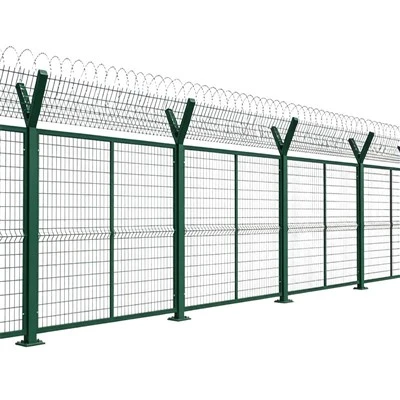
If the tennis court is located near an airport, special considerations must be taken. In addition to the standard factors for fence height, there are security and safety requirements. A taller fence, around 8 - 12 feet, is necessary to prevent balls from entering the airport perimeter. Airport Fence is designed to meet the strict security standards of airport areas. These fences are often made of high - strength materials and have features such as anti - climb designs.
Making the Final Decision
After considering all the factors above, it's time to make the final decision on the fence height for your tennis court. Evaluate the skill level of the players, the location of the court, local regulations, and the type of fencing material you prefer. You may also want to consult with a professional fencing contractor or a tennis court designer to get their expert advice.
As a Sports Field Fencing supplier, we are here to help you make the right choice. We offer a wide range of fencing options in different heights and materials to meet your specific needs. Whether you are setting up a small backyard court or a large professional facility, we have the expertise and products to ensure a successful installation.
If you are interested in purchasing sports field fencing for your tennis court, we invite you to contact us for more information. Our team of experts will be happy to discuss your requirements, provide you with a detailed quote, and guide you through the selection process.
References
- American Tennis Association. Guidelines for Tennis Court Construction and Maintenance.
- Local Municipal Codes and Regulations.
- Fencing Industry Association. Best Practices for Sports Field Fencing.